Diastasis Recti (DRA) Explained: Why Crunches Won’t Close the Gap

If you’ve ever looked down at your stomach postpartum and noticed a "pooch" that won't go away, or a strange ridge that pops up when you try to sit up in bed, you’ve likely heard the term Diastasis Recti (DRA).
The first instinct for many moms is to hit the gym and start doing crunches or sit-ups to "tighten things up." However, as a Pelvic Floor PT, I’m here to tell you that crunches may not be the best place to start if you want to heal your abdominal wall.
Here is the breakdown of what is actually happening in your core and how to truly start the healing process.
What is Diastasis Recti, anyway?
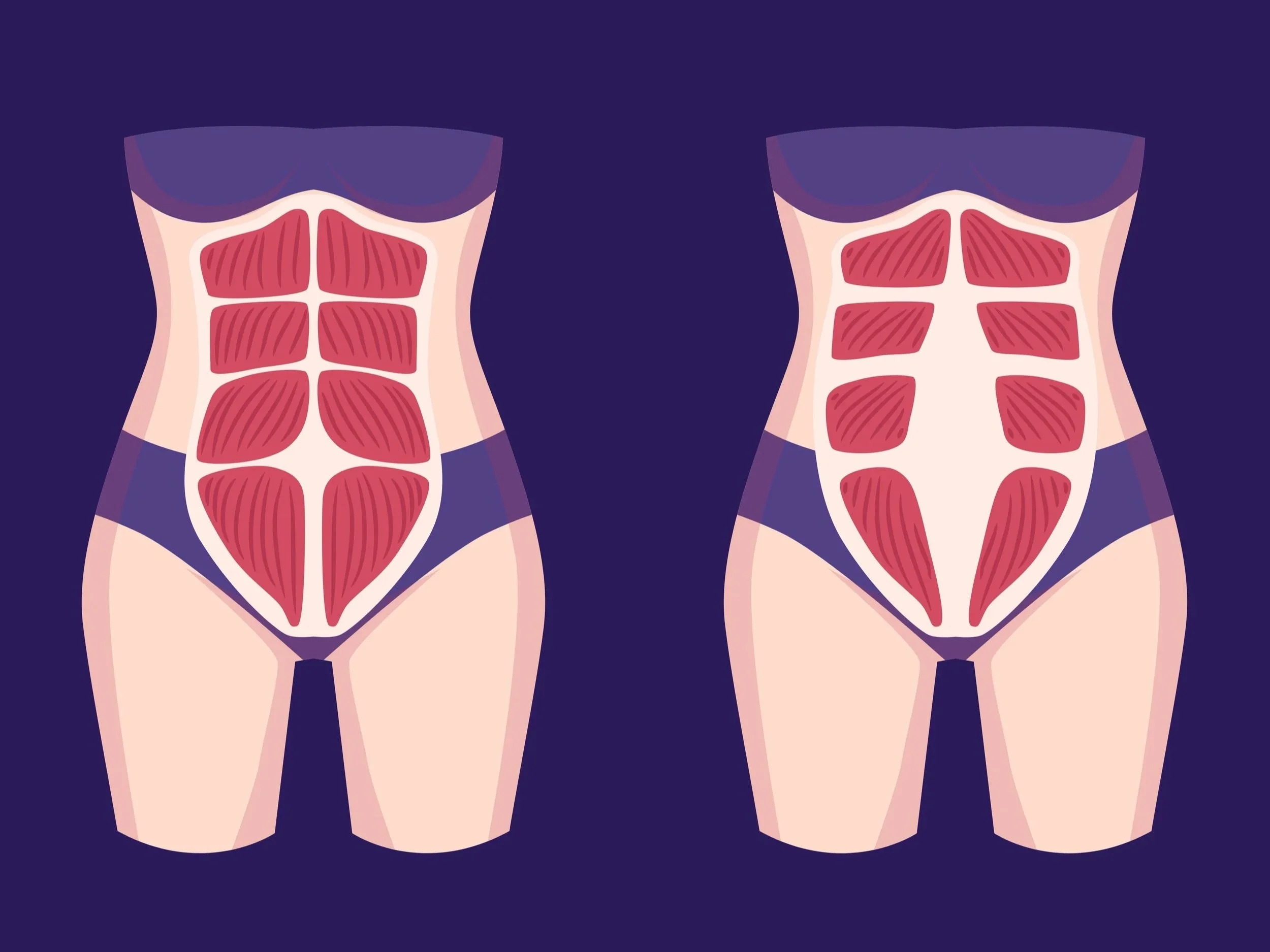
Diastasis Recti is the partial or complete separation of the rectus abdominis (your "six-pack" muscles). These muscles meet at a midline of connective tissue called the Linea Alba.
During pregnancy, your belly expands to accommodate a growing human. To make room, the Linea Alba stretches and thins. DRA occurs when that connective tissue loses its tension and the muscles stay separated after birth.
It’s important to remember: DRA isn't just a "gap" problem; it’s a tension problem.
The Crunch Myth: Why Sit-Ups Fail
Traditional crunches and sit-ups focus on the outermost layer of your abs (the "six-pack"). When you have DRA, these muscles are often already tight or overactive, while the deeper stabilizing muscles are "offline."
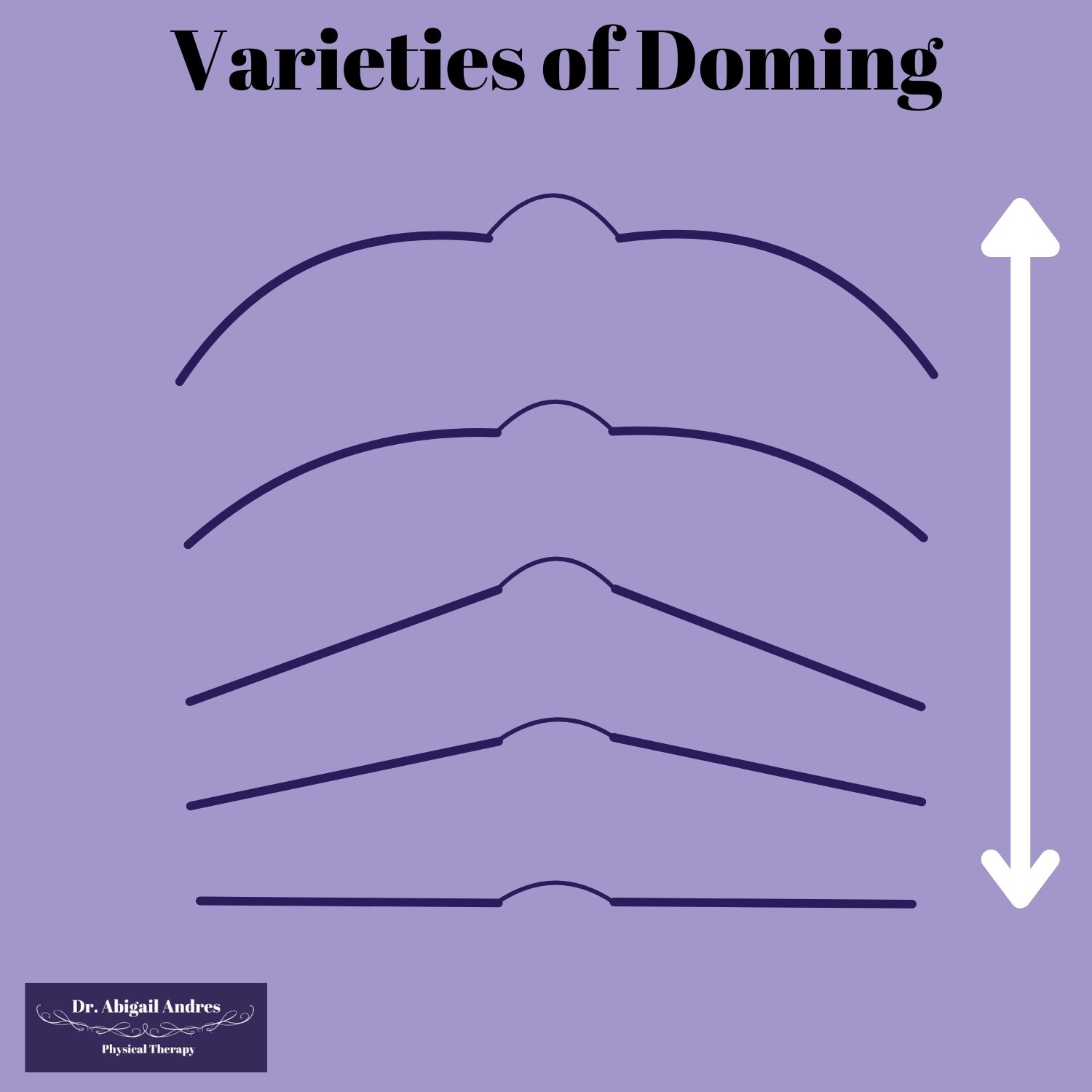
When you perform any exercise, like a crunch, without appropriate stability in the abdominal wall, you create a massive amount of forward pressure. Because the midline (the Linea Alba) is weak, that pressure has nowhere to go but out. This results in coning or doming—that ridge you see sticking out.
Not All "Doming" is Created Equal
If you’ve spent any time researching DRA, you’ve probably been told to "watch for the dome" and stop exercising the second you see it. But here is the professional secret: Controlled doming isn’t always a red flag.
Think of your abdominal wall like a trampoline. When you jump on it, the mat is supposed to move and give under pressure. That is a sign of a healthy, functional system!
The Foundation: Transversus Abdominis (TrA) Activation
If we want to close the gap and restore function, we have to go deep. The Transversus Abdominis (TrA) is your body’s natural corset. It is the deepest layer of abdominal muscle, and its job is to wrap around your midsection and create stability.
How to find your TrA:
Lay on your back with your knees bent.
Place your fingers just inside your hip bones.
Exhale slowly (like you're blowing through a straw) and imagine gently drawing your hip bones toward each other, or pulling your belly button toward your spine without moving your back.
You should feel a deep tension under your fingers—that’s your TrA waking up!
In physical therapy, we look for two things:
1. Excessive or Out-of-Control Doming
This is when the midline "peaks" sharply and feels very soft or squishy to the touch, or when you feel like you have absolutely no control over the pressure. This is a signal that your "canister" is overwhelmed and we need to adjust your strategy.
2. Controlled, Functional Tension
Sometimes, you might see a slight lift in the midline, but when you touch it, the tissue feels firm and resilient. This means your muscles are actually doing their job! They are creating tension to manage the load.
This is where having a Pelvic PT is a game-changer.
My job isn't to tell you to "stop" every time your body moves; my job is to help you determine if your system is managing the load or being managed by it. If the tension is good, we keep progressing! We want to find your "edge"—that sweet spot where your muscles are working hard but staying in control.
Healing your core shouldn't mean staying on the sidelines. It’s about learning to trust your body’s signals so you can get back to the weights, the running, and the active life you love.
How to Start Healing Today
Wake up your TrA: Work on finding a connection to your deep core. Try this in different positions for an added challenge!
Exhale on Exertion: Whenever you do something hard (lifting, pushing, pulling), breathe out. This helps the pelvic floor and TrA engage naturally to manage the pressure.
Focus on Tension, Not Just Distance: It doesn't matter if you have a 2-finger gap if the tissue underneath is firm and strong. We want a "functional" core, not just a narrow one.
Ready for a Personalized Roadmap?
Healing DRA is about more than just a list of exercises; it's about how you move in your everyday life. If you're tired of the "mummy tummy" and want to feel strong again, I can help.